.png)
Sciatica pain relief - The most important things to understand

Sciatica is a clinical diagnosis based on symptoms of radiating pain in one leg. Not all lower back pain is sciatic, but all sciatic pain originates from inflammation or compression of the nerve roots in the L4 S1 region of the spine.
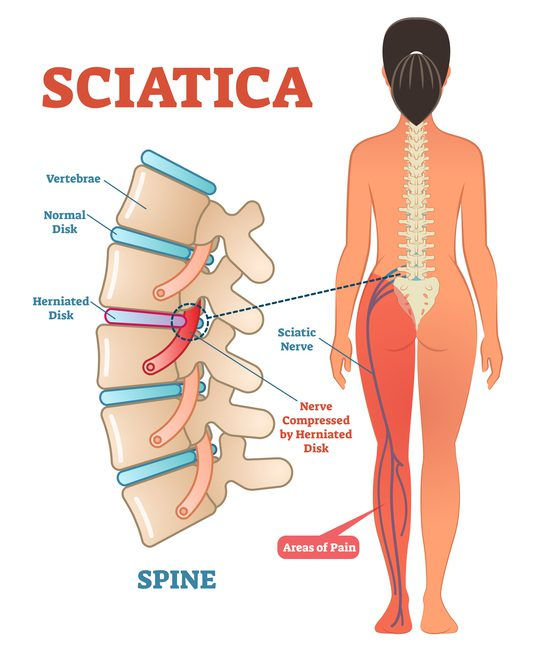
Here are four key things to help you better understand and treat your sciatica (based on the most up-to-date research, which I'll link below):
The majority of people improve over time with conservative treatment
Time is your best friend for allowing the sciatic nerve to calm down. Conservative treatment includes exercise, manual therapy, and pain management strategies.
Imaging is not required to confirm a diagnosis and is generally only requested if pain persists beyond 12 weeks or a person develops progressive neurological symptoms.
Unnecessary imaging has its downsides, largely psychological ones. When we're looking for problems, we tend to find them. Disc bulges and "degenerative" changes are sometimes completely normal and asymptomatic, but when seen in the presence of pain, we like to form causal relationships.
Just understand that an image isn't the be all end all.
Surgery is a treatment option but shows no better outcomes than conservative treatment.
Regardless of whether you choose to do surgery or not, the plan afterwards is the same; manage symptoms with conservative care (exercise, manual therapy, etc.). The upside of surgery is that it can speed up recovery, but the downside is that you have to deal with the permanent consequences of surgery and potential risks.
When you follow sciatica patients years after both options (surgery or no surgery), the long-term outcomes are essentially the same.
There are no sciatica-specific exercises.
Movement is great for sciatica, but unlike many other pathologies where you may be looking to actively address a specific weakness or immobility in something like a lower back muscle or a rotator cuff tendon, you're simply looking to find movements that don't irritate the already sensitive nerve.
For example, if squats feel good and allow me to train my legs in a tolerable way, it becomes a good sciatica exercise. Every case is different and needs to be treated as such. Squats may feel great for one case of sciatica and intolerable in another, hence the need to properly assess and choose the right movements for yourself.
Nerve pain can be particularly nasty, but the more you understand it, the better you'll get at managing it.
To your good health,
Coach Stephen
References:
https://www.bmj.com/content/367/bmj.l6273.full - Diagnosis and treatment of sciatica (2019)
Thanks for reading.
P.S.
Whenever you’re ready, here are a few additional ways that I may be able to help you.
Free:
Instagram: @CoachStrumos
*I share tons of bite-sized lessons and tips here
Paid:
1-on-1 Pain Management and Strength Coaching: Apply here


Comments