.png)
You didn't get hurt because you "lifted wrong."

I spoke recently with someone who, unfortunately, tore her rotator cuff while training. Her read on the situation was, "I think I just lifted it wrong. My technique was off."
We often cite the desire to ensure we “do things right” or risk hurting ourselves through exercise. But that statement implies that there is a right and wrong way to do every single exercise and movement.
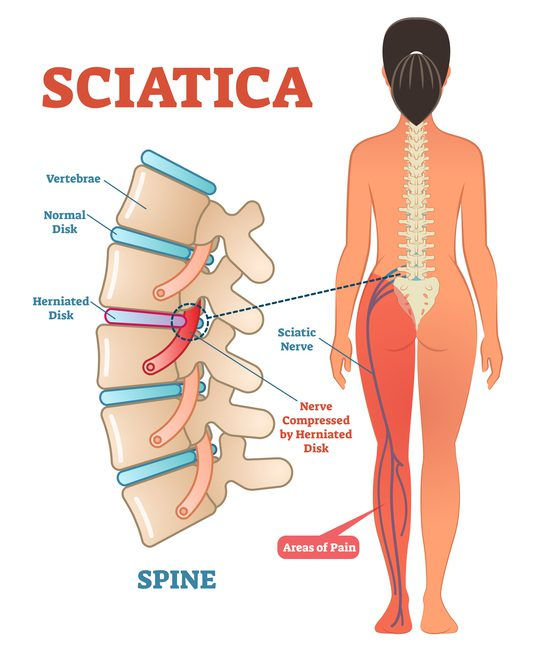
Technique is important, but not in the ways you think. We'll often see pictures like the one below and try to replicate them.

Pain and injury only occur when we do something beyond our capacity. That's the only situation when it happens. That's why there's no such thing as a bad exercise, posture, or movement, because more context and nuance are needed to understand why someone would get hurt doing a certain movement.
In the case of the torn rotator cuff mentioned earlier, she blamed her technique, but upon further investigation, she was being pushed brutally hard by her trainer and was doing way too much until her shoulder finally gave.
Is it fair to blame poor technique for that? You could argue that being pushed too hard resulted in a breakdown of technique, which then led to injury, but even then, I would still blame doing too much over technique.
If I pick something up with a rounded back, it's often thought of as a risky position and one that would cause back pain. But what if I intentionally train to lift things with that technique? Maybe it's part of what I do as part of a physical labour job, or maybe I just do a lot of Jefferson curls and zercher deadlifts. I would naturally, in this situation, feel stronger and more capable lifting with a rounded back because the human body adapts to what we put in front of it.
In other words, if I have practiced with one type of technique, that inherently makes it less risky. If I never do anything with a rounded back and then try to pick up something that way, sure, I'd be at risk of hurting my back.
If you're sedentary for 6 months and then try to lift a couch, hurt your back, and blame it on the fact that you lifted wrong, you're fooling yourself.
It's important to note that life doesn't happen with what we imagine is "perfect technique". Try tying your shoes or putting your socks on with a perfectly neutral spine. Try picking up your toddler dozens of times a day with a perfect brace of your core.
This isn't just my opinion; it's based on the research.
A 2020 study found no causality between spine and lifting postures and lower back pain
A 2021 study found that greater flexion forces on your spine (rounding your back) were not associated with lower back pain, raising questions about the current paradigm around "safe lifting."
A 2011 study found that genetics were a bigger risk of herniating a disc in your back than your posture or lifting technique
But, in saying all that, movement technique does still matter in three situations.
First is when a movement is painful.
If my knees hurt while squatting, I can alter my technique to shift some of the stress and still be able to perform the movement.
In this case, I’d cue myself to “sit back” more while not letting my knees come as far forward. It’s still a squat, but I’m biasing more stress to my hips and back as opposed to my ailing knees.
There's no single way to squat. Not only is every individual different (if I line up 30 people, I'll see 30 different squats), but there's so much variation we can use with a single exercise to suit our needs.
The second is when you’re trying to load a specific tissue.
If I want to load the knees as much as possible and train my quads, I can alter my squat technique to provide as much stimulus as possible and get as much bang for my buck with the exercise.
In this case, I’d purposely drive my knees as far forward as I can, taking the hips as much out of the equation as possible to get the stimulus I want. It works both ways.
The third situation is when you’re trying to move as efficiently as possible.
For performance-based movements (for example, when you’re trying to lift as heavy as possible), you need efficiency.
If I’m loose, unstable, and not leveraging my body optimally, I won’t be able to perform as well.
In a scenario like deadlifting, great technique can make the weight feel lighter because you’re moving more efficiently. If you brace your midsection and push with your legs while lifting that couch, it will feel easier than if you tried to lift it solely with your upper body. It doesn't mean you'll get hurt if you don't, but you'll be able to produce more force and thereby move the thing more easily.
To sum up.
Again, most people stress about technique because they think they’re going to hurt themselves.
The reality is that no specific technique causes pain.
Squatting one way may hurt someone's knees, but feel good for another. In other words, being able to modify your technique to the situation and your goal is more important than the technique itself.
All exercises are made up anyway, and they’re tools for us to acquire a means to an end. Use them in ways that make the most sense to you based on your goals.
It’s less about “not hurting yourself” and more about “getting what you want out of an exercise”.
Training becomes more functional when you realize how you move in everyday life and emulate your training accordingly.
So train in awkward positions, bend and twist, slouch your posture and don’t stress about it. There’s no such thing as perfect form anyway.
To your good health,
Coach Stephen

References:
https://pubmed.ncbi.nlm.nih.gov/21266637/ - posture and lifting technique
https://pubmed.ncbi.nlm.nih.gov/31451200/ - causality between lifting technique and pain
https://pubmed.ncbi.nlm.nih.gov/34288926/ - greater forces on the spine and injury risk
Thanks for reading.
P.S.
Whenever you’re ready, here are a few additional ways that I may be able to help you.
Free:
Instagram: @CoachStrumos
*I share tons of bite-sized lessons and tips here
Paid:
1-on-1 Pain Management and Strength Coaching: Apply here


Comments